
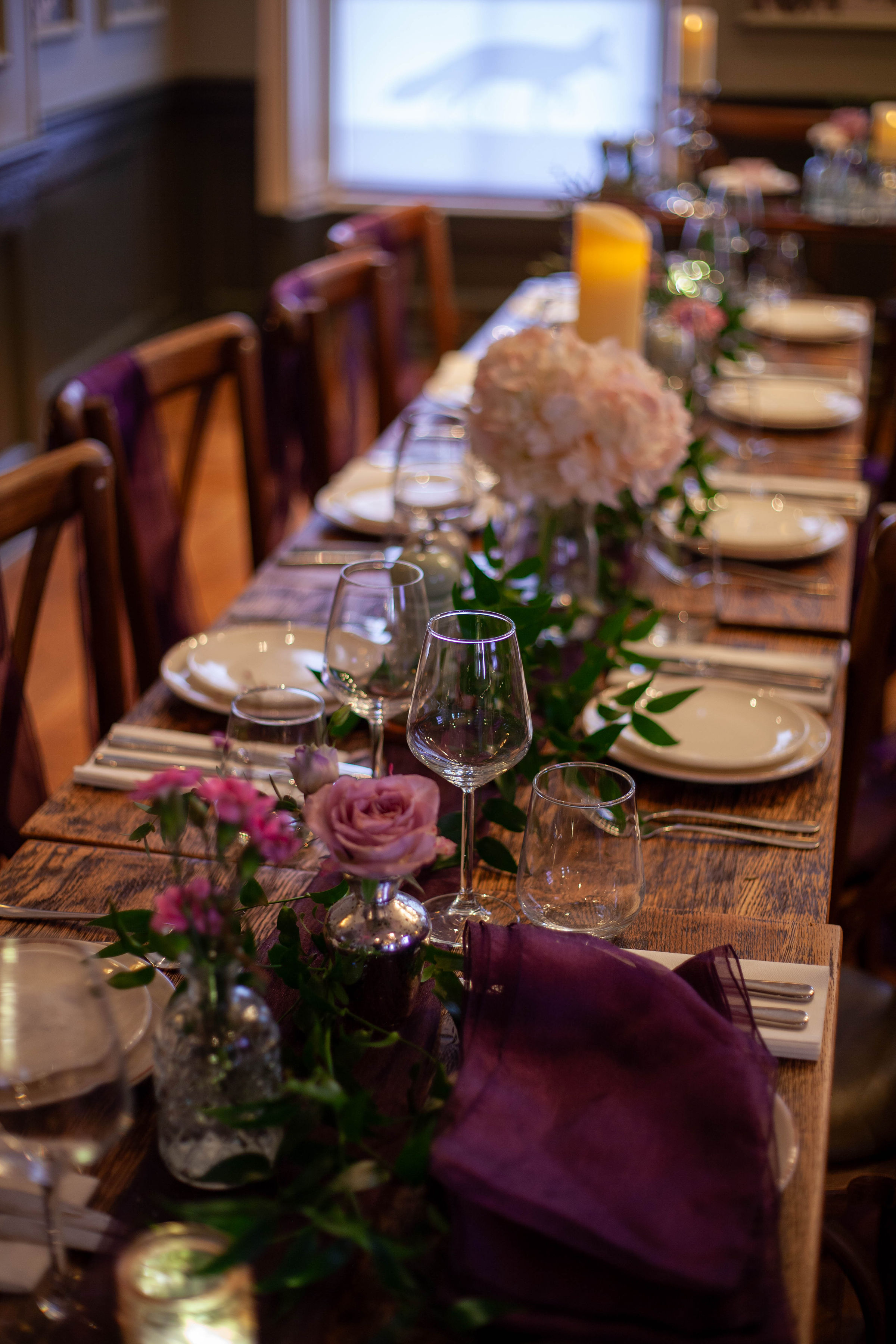
Creating your wedding breakfast seating plan can feel like one of the trickiest jobs on your wedding planning checklist – but it doesn’t have to be. With a little organisation, a clear list of priorities and a good understanding of your guests, you can create a seating plan that looks beautiful, works with your Somerset wedding venue and, most importantly, helps your guests feel comfortable and enjoy the wedding breakfast.
Whether you’re planning a relaxed barn wedding in the Somerset countryside, an elegant country house wedding or a celebration somewhere across the South West, the same basic principles apply. Here’s my guide to creating a practical and thoughtful wedding seating plan without losing your mind in the process!
1. Finalise your guest list first
Before you start moving names around, make sure you have your final guest count – or are as close to final as possible.
There is little point designing a beautiful seating plan for 100 guests if your final numbers suddenly become 106. Your table numbers, table sizes, catering requirements and room layout all depend on having accurate numbers.
Make sure your list includes:
- Adults
- Children
- Babies
- Babies requiring highchairs
- Plus-ones
- Guests with specific accessibility requirements
- Confirmed dietary requirements
- Anyone who has cancelled or changed their RSVP
I recommend keeping one master guest list and using this as your reference throughout the planning process.
2. Start with the actual venue floor plan
One of my biggest tips is don’t create your seating plan in isolation from your venue.
Ask your wedding venue or wedding planner for the proposed floor plan showing the actual size and shape of the room, entrances, exits, bar, dance floor, toilets and service areas.
Then establish:
How many tables do you need?
What shape will the tables be?
How many people can comfortably sit at each table?
Where will the top table or sweetheart table go?
Where are the doors and walkways?
The number of guests isn’t the only consideration. You need to make sure there is enough room for guests and staff to move around comfortably, particularly in a busy wedding breakfast.
This is especially important if you’re planning a wedding in a barn, marquee or unusual-shaped room where the layout may be very different from a traditional function room.
3. Seat couples together
This might sound obvious, but it’s worth saying!
Generally, couples will expect to sit together during the wedding breakfast. This includes married couples, engaged couples and partners who have been invited to the wedding.
If someone has been invited with a partner they don’t know particularly well, sitting them together gives them a familiar person to talk to and enjoy the meal with.
From there, you can work outwards and build groups of guests around each couple.
4. Keep families together where possible
If parents and their children are attending, consider seating them together or at least close to one another.
This can be particularly helpful when younger children are involved. Parents may need to help with food, drinks, cutlery or trips to the toilet, so placing them somewhere practical can make the wedding breakfast much easier for everyone.
Think about highchairs and space around the table too. A table that technically seats ten adults may not comfortably accommodate eight adults, two toddlers and two highchairs!
5. Think about your bridal party
Before you start placing bridesmaids, groomsmen and other members of the wedding party, decide what you actually want.
Will your bridal party sit together?
Will bridesmaids sit with their partners?
Will members of the wedding party sit with their families?
Or would you prefer everyone to mix with different groups of friends?
There is no single ‘correct’ way to arrange this. Your wedding breakfast should work for you and your guests.
6. Decide on your top table – or don’t have one!
Traditionally, the top table might include the newlyweds, parents, best man and maid of honour, but modern weddings have many different options.
You could have:
- A traditional top table
- A sweetheart table for two
- A larger table with the bridal party
- A table with close family
- A head table where everyone faces into the room
- No formal top table at all
Some couples love the idea of sitting with their wedding party, while others prefer having a quiet meal together as newlyweds.
Think about what feels right for you rather than what you think you are ‘supposed’ to do.
7. Group guests who have something in common
One of the easiest ways to create a successful wedding seating plan is to look for connections between your guests.
Do you have university friends who haven’t seen each other for years?
Colleagues who socialise outside work?
Cousins of a similar age?
Friends who share the same hobbies?
People who live in the same area?
People who already know each other?
Could you secretly assign one guest per table as the team leader and give them tasks?
These connections can give guests an instant conversation starter and make the wedding breakfast feel much more relaxed.
8. Seat work colleagues together
If you have several work colleagues attending, consider putting them together.
They will already have plenty to talk about and may appreciate having familiar faces around the table.
However, don’t feel that you have to put every person from the same workplace on one table. If you have a few colleagues who would get on particularly well with other guests, mixing them can work brilliantly too.
9. Mix personalities
This is one of my favourite seating plan tips.
Don’t automatically put every outgoing guest together and every quieter guest together.
Instead, think about creating a balance of personalities.
A mixture of introverts and extroverts can create a lovely dynamic around a table. Someone naturally confident might help get the conversation going, while quieter guests can contribute when they feel comfortable.
This is where the table team leader comes into their own.
Of course, you know your guests best. The aim isn’t to force anyone to become the life and soul of the party – it’s simply to create tables where there is potential for natural conversation.
10. Keep guests who don’t get along apart
This is where creating a wedding seating plan can become particularly interesting!
If there are family disagreements, former partners, complicated friendships or guests who simply don’t get along, don’t put them together and hope for the best.
Your wedding day is not the time to resolve old arguments.
You don’t necessarily need to put people on opposite sides of the room either. Simply creating enough distance that they can enjoy their meal without feeling uncomfortable can be enough.
If necessary, ask someone you trust for advice. Sometimes another person can see an obvious solution that you’ve completely missed because you’re too close to the situation.
11. Think carefully about accessibility
Accessibility should be part of your seating plan from the beginning rather than an afterthought.
Speak to your guests about what they need and check the venue layout before deciding where they should sit.
For guests using wheelchairs, mobility aids or pushchairs, consider:
- Easy access to the table
- Clear routes between tables
- Doorways and entrances
- Access to toilets
- Space for a wheelchair or mobility aid
- Space for a pushchair or pram
- Whether the table itself provides enough room
A guest may also prefer to be closer to an exit, entrance or toilet for personal reasons.
Don’t make assumptions – ask your guest what would make them most comfortable and then work with your venue to make it happen.
12. Don’t forget the little ones
Children can completely change the dynamics of a table!
Think about the ages of the children attending and whether they would benefit from sitting with their parents, grandparents or other children.
Very young children may need highchairs, while older children may enjoy sitting together.
If you have several children of a similar age, a children’s table can sometimes work brilliantly – but it isn’t suitable for every age group or every wedding.
Again, think about the individual children rather than following a rule.
13. Consider dietary requirements and meal choices
Your seating plan and catering list need to work together.
Make sure your final guest list clearly records dietary requirements and meal choices where your caterer requires them.
Your caterer or venue may need table and seat information to ensure the correct meals reach the correct guests.
This is another reason why your final seating plan should be checked carefully before it is sent to your caterer, venue or stationery designer.
14. Choose your seating plan method
There are lots of ways to create a wedding seating plan.
You might use:
- A digital wedding seating planner
- A spreadsheet
- A dedicated seating-plan app
- Sticky notes on a large piece of paper
- Printed guest names that you can physically move around
- A combination of digital and physical planning
Personally, I love anything that allows you to move guests around easily!
Sticky notes can be particularly useful at the beginning because you can physically move people from table to table without constantly deleting and retyping names.
Once you’re happy, transfer the final version into a digital format so you have a clean master copy.
15. Number your tables clearly
Decide how you want your tables labelled.
Traditional table numbers are simple and practical, but you could also use names relating to your relationship, travels, favourite places, films, books, flowers or something meaningful to you.
Whatever you choose, make sure the table names or numbers are easy for guests to understand when they arrive.
16. Get someone else to check it!
This is one of the most important steps.
Once you think your wedding seating plan is finished, ask someone else to check it.
Ideally, this should be someone who wasn’t involved in creating it.
Ask them to check:
- Is every guest included?
- Is anyone listed twice?
- Does every table have the correct number of guests?
- Are couples together?
- Are children seated correctly?
- Are accessibility requirements covered?
- Are there any obvious family or friendship issues?
- Do the table numbers match the venue floor plan?
- Are meal choices recorded correctly?
- Is anyone sitting somewhere that doesn’t make sense?
A fresh pair of eyes can spot mistakes that you’ve become blind to after looking at the plan for hours!
17. Keep a final master copy
Once everyone is happy, save your final seating plan somewhere safe.
I recommend having a digital copy as well as a printed version.
Give the final version to the relevant people, such as your wedding planner, venue coordinator and caterer, depending on how your wedding is being organised.
And remember: the seating plan you create for the stationery isn’t necessarily the same document the catering team needs. Your caterer may need additional information such as meal choices or dietary requirements.
Final thoughts: your seating plan doesn’t have to be perfect
Creating a wedding breakfast seating plan can feel like solving a giant puzzle, particularly when you have lots of guests, different friendship groups and complicated family dynamics.
But remember that you don’t need to create the perfect table where every single person knows everyone else.
Your aim is simply to create a comfortable, practical arrangement where guests have people to talk to, families can enjoy the meal together, accessibility needs are considered and any known tensions are managed sensibly.
Start with your confirmed guest list, work with your Somerset wedding venue’s actual floor plan, deal with the practical requirements first and then start thinking about personalities and relationships.
And if you’re completely stuck? Ask for another pair of eyes.
Sometimes moving just one person can make the entire seating plan fall into place!
Planning a wedding in Somerset or the South West?
From elegant country houses and rustic barns to relaxed marquee celebrations, Somerset and the wider South West offer an incredible variety of wedding settings. The right table layout can make a huge difference to how the room looks and, more importantly, how your guests experience your wedding breakfast.
As a wedding planner and venue stylist, I know that the seating plan isn’t simply a list of names – it’s part of the overall design and flow of your wedding day.
Get the layout right, and your tables can look beautiful, your room can flow naturally and your guests can relax, eat, drink and celebrate with the people around them.
Now that’s a seating plan worth spending a little time on.
You have your guest numbers and table plan organised, if you are considering your entertainment options then this blog is for you https://weddingregency.co.uk/?p=333
[…] Would you like help with your seating plan? Click here for my blog containing useful tips How to make a wedding breakfast seating plan – weddingregency.co.uk […]